Arsenic and Its Allotropes: A Comprehensive Study

wherearewegoing.net – Arsenic, a chemical element with the symbol As and atomic number 33, is a metalloid that exhibits a variety of allotropes. These allotropes are different structural forms of the same element, each with distinct physical and chemical properties. This article provides a detailed overview of the main allotropes of arsenic, their structures, and their potential applications.

Main Allotropes of Arsenic

1. Grey Arsenic (α-As)

Grey arsenic is the most stable allotrope at ambient conditions. It consists of layers of puckered hexagons in a rhombohedral crystal structure. The atoms in grey arsenic adopt a layered arrangement, which gives it unique mechanical and electronic properties.

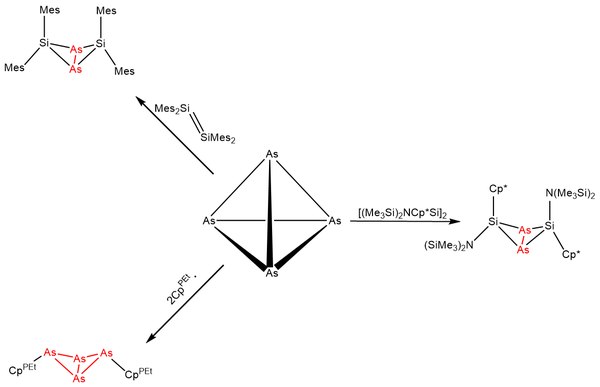
2. Yellow Arsenic (α-As4)

Yellow arsenic is composed of As4 tetrahedra. This allotrope is less stable than grey arsenic and is typically formed under high-pressure conditions. The tetrahedral structure of yellow arsenic contributes to its distinct optical and electronic properties.

3. Black Arsenic

Black arsenic is another allotrope of arsenic, which has a layered structure similar to grey arsenic but with a different arrangement of atoms. This allotrope is also less stable than grey arsenic and is formed under specific conditions.

Additional Allotropes and Nanostructures

4. Semiconducting Layered Arsenic

Recent studies have proposed four different thermodynamically stable structural phases of arsenic monolayers. These phases exhibit unique electronic properties and can switch into a topological insulator via an electric field, making them promising for future electronic applications.

5. Icosahedral and Ring-Shaped Allotropes

Predictive studies have suggested the existence of two novel families of arsenic nanostructures: icosahedral cages and ring-shaped chains. These nanostructures have been predicted to exhibit unique mechanical and electronic properties, which could be exploited in nanotechnology.

6. K4 Arsenic

A new stable direct-gap arsenic allotrope, K4 arsenic, has been discovered. Unlike the known stable crystalline arsenic allotropes with layered structure at ambient conditions, K4 arsenic is a non-layered 3D phase. This allotrope exhibits dynamic stability and unique electronic properties.

Applications and Potential

The study of arsenic and its allotropes provides valuable insights for the development of next-generation materials. The unique structures and properties of these allotropes make them suitable for various applications, including:

  • Electronic Devices: The semiconducting properties of certain arsenic allotropes make them promising for use in electronic devices, particularly in the development of topological insulators and other advanced electronic materials.
  • Nanotechnology: The predicted icosahedral and ring-shaped allotropes of arsenic could be used in the design of novel nanomaterials with unique mechanical and electronic properties.
  • Thermoelectric Applications: Research on the thermoelectric properties of arsenic monolayers has shown potential for their use in energy conversion technologies.

Conclusion

Arsenic and its allotropes represent a fascinating area of study with significant implications for materials science and technology. The unique structures and properties of these allotropes offer a wealth of opportunities for the development of new materials and technologies. Continued research in this field is expected to uncover even more potential applications and deepen our understanding of the fundamental properties of arsenic.

Unconventional Tips for Acing Your Exams: Study Hacks

Exams can be daunting, but with the right strategies, you can turn them into opportunities to showcase your knowledge and skills. Traditional study methods are effective, but sometimes you need unconventional tips to give you that extra edge. In this article, we’ll explore a variety of study hacks that go beyond the usual advice, helping you to ace your exams with confidence and ease.

  1. The Pomodoro Technique:
    Traditional study sessions can be long and monotonous, leading to burnout. The Pomodoro Technique, developed by Francesco Cirillo, involves breaking your study time into short, focused intervals, typically 25 minutes, separated by short breaks. This method enhances concentration and prevents mental fatigue. After four “Pomodoros,” take a longer break of 15-30 minutes. This technique not only boosts productivity but also helps in retaining information better.
  2. Teach What You Learn:
    One of the most effective ways to understand and remember material is to teach it to someone else. This could be a friend, family member, or even a study group. When you explain a concept in your own words, you’re forced to process the information more deeply, which can significantly improve your understanding and recall.
  3. Use the Feynman Technique:
    Named after the Nobel Prize-winning physicist Richard Feynman, this technique involves simplifying complex topics. Start by choosing a concept you want to understand, and then explain it as if you were teaching it to a child. This forces you to use simple language and to understand the concept at a fundamental level. Review and refine your explanation, and then teach it to someone else to reinforce your understanding.
  4. Create a Study Soundtrack:
    Music can be a powerful tool for concentration and focus. Create a playlist of instrumental or classical music that helps you concentrate. Some people find that binaural beats or white noise can also enhance focus. Experiment with different types of music to find what works best for you.
  5. Change Your Environment:
    Studying in the same place all the time can lead to stagnation. Try changing your study environment to keep your mind fresh and engaged. Whether it’s a different room in your house, a local library, or a quiet café, a change of scenery can stimulate your brain and make studying more enjoyable.
  6. Use Mnemonic Devices:
    Mnemonics are memory techniques that help in retaining information. They can be acronyms, rhymes, or visual images that help you remember lists, formulas, or complex concepts. For example, “ROYGBIV” helps you remember the colors of the rainbow, and “HOMES” can help you remember the Great Lakes (Huron, Ontario, Michigan, Erie, Superior).
  7. Incorporate Physical Activity:
    Studies have shown that physical activity can improve cognitive function and memory. Take short breaks to stretch, walk, or do a quick workout. Even a few minutes of exercise can increase blood flow to the brain and help you absorb information more effectively.
  8. Practice Self-Testing:
    Instead of passively rereading notes, actively test yourself. Use flashcards, practice exams, or even just try to recall information from memory. Self-testing is a more effective way to learn and retain information than passive study methods.
  9. Sleep on It:
    Your brain consolidates memories while you sleep, so getting a good night’s rest is crucial for retaining information. Avoid cramming the night before an exam, as sleep deprivation can significantly impair cognitive function. Make sure to get 7-9 hours of quality sleep to perform at your best.
  10. Visualize Success:
    Visualization can be a powerful motivational tool. Spend a few minutes each day visualizing yourself successfully completing your exams. Imagine the feeling of accomplishment and how you’ll reward yourself afterward. This positive visualization can boost your confidence and motivation.

Conclusion:
While traditional study methods are important, incorporating these unconventional study hacks can give you a competitive edge. From the Pomodoro Technique to visualization, these strategies can help you to study more effectively, retain information better, and ultimately ace your exams. Remember, the key to success is finding what works best for you and being consistent with your study habits. Good luck!