
Tips for Crafting a Gripping Story: Exploring the Supernatural

wherearewegoing.net – The supernatural genre offers a vast playground for writers to explore the unknown, the eerie, and the inexplicable. Whether you’re writing a horror novel, a fantasy story, or a cozy mystery with a twist, incorporating supernatural elements can add depth and intrigue to your narrative. In this article, we will delve into some essential tips for writing a compelling supernatural story.

Crafting a Supernatural Universe

One of the first steps in writing a supernatural story is to craft a believable universe. This involves creating a detailed backstory for your supernatural elements and the world they inhabit. Understanding the origins of your supernatural beings and the rules that govern their existence can help you build a cohesive and immersive world for your readers.

Developing Supernatural Characters

Characters are the heart of any story, and in the supernatural genre, they can take on extraordinary forms. Whether you’re writing about angels, demons, ghosts, or otherworldly creatures, it’s crucial to give them depth and relatable qualities. Readers should be able to connect with your characters, even if they possess supernatural abilities.

Creating Suspense and Atmosphere

Supernatural stories thrive on suspense and atmosphere. Building tension through carefully crafted scenes and descriptions can make your story more engaging. Use sensory details to create a vivid and eerie atmosphere that draws readers into your world.

Respecting Magical Systems

If your story includes magical elements, it’s important to establish and respect the rules of your magical system. Consistency is key in maintaining the believability of your world. Readers should understand the limitations and capabilities of the magic in your story, which can add to the overall tension and excitement.

Adding a Human Element

Despite the supernatural elements, it’s essential to include a human element in your story. This can be achieved by focusing on the emotional and psychological struggles of your characters. By grounding your story in relatable human experiences, you can create a more impactful and resonant narrative.

Conclusion

Writing a supernatural story is a thrilling endeavor that allows you to explore the boundaries of reality and imagination. By crafting a detailed universe, developing compelling characters, creating suspense, respecting magical systems, and adding a human element, you can create a story that captivates and terrifies your readers. Embrace the unknown and let your imagination run wild!

True Crime Story of Crime and Punishment: Hitman’s Apprentice

wherearewegoing.net – In the annals of true crime, few stories are as chilling and captivating as that of “The Hitman’s Apprentice.” This tale delves into the dark underbelly of organized crime, where loyalty, betrayal, and the quest for power intertwine in a deadly dance. It is a narrative that not only explores the mechanics of a hitman’s trade but also delves into the psychological and moral complexities that arise when one becomes an apprentice to death.

The story centers around a young man, whom we shall refer to as Alex, to protect his identity. Alex was an ordinary individual, living an unremarkable life, until he crossed paths with a notorious hitman. This encounter was not by chance; it was a calculated move on Alex’s part, driven by a mix of curiosity, greed, and a desire for an adrenaline rush that the mundane life could not offer. Little did he know, this decision would irrevocably alter the course of his life, leading him down a path from which there was no return.

The hitman, a seasoned professional with a reputation for efficiency and discretion, saw potential in Alex. He was not just looking for an assistant but an apprentice who could learn the trade and perhaps one day take over. The training was rigorous, both mentally and physically. Alex was taught the art of surveillance, the importance of planning, and the necessity of maintaining anonymity. He learned how to use weapons, how to dispose of evidence, and, most importantly, how to detach emotionally from the act of taking a life.

As Alex became more involved in the hitman’s world, he began to see the consequences of their actions up close. The families of the victims, the ripple effects of violence, and the moral decay that comes with living outside the law. Despite these revelations, Alex found it increasingly difficult to extricate himself from this life. The money was good, the thrill addictive, and the hitman had become a mentor figure, albeit a twisted one.

The turning point came when Alex was asked to carry out his first hit. It was a test of loyalty, a rite of passage. The target was a rival gang member, someone who, according to the hitman, deserved to die. Alex, torn between his newfound skills and the remnants of his conscience, hesitated. This moment of hesitation would lead to a series of events that would ultimately unravel the carefully constructed world of the hitman and his apprentice.

The law enforcement agencies, which had been tracking the hitman for years, were closing in. The hitman’s meticulous planning and anonymity were his greatest strengths, but they also made him complacent. He underestimated the determination of the police and the impact of technology in solving crimes. As the net tightened, Alex faced a choice: continue down this path to certain doom or betray his mentor and seek redemption.

The climax of the story is a tense standoff between the hitman, Alex, and the police. In a final act of defiance, the hitman chooses to go down fighting, while Alex, seeing no other way out, surrenders. The aftermath is a trial that captivates the nation, revealing the inner workings of the hitman’s trade and the psychological toll it takes on those involved.

“The Hitman’s Apprentice” is more than just a story of crime and punishment. It is a reflection on the human condition, the ease with which one can be seduced by power and money, and the struggle to find redemption in a world that is quick to judge. It serves as a cautionary tale, reminding us of the thin line between right and wrong, and the heavy price one pays for crossing it.

In the end, Alex serves his time, but the scars of his past remain. He emerges a changed man, haunted by the ghosts of his decisions. His story is a stark reminder of the consequences of our choices and the eternal quest for forgiveness in the face of unforgivable acts. “The Hitman’s Apprentice” is a narrative that will linger in the minds of its readers, a testament to the complexity of human nature and the enduring hope for redemption.

The Story of World War I: From Trenches to Treaties

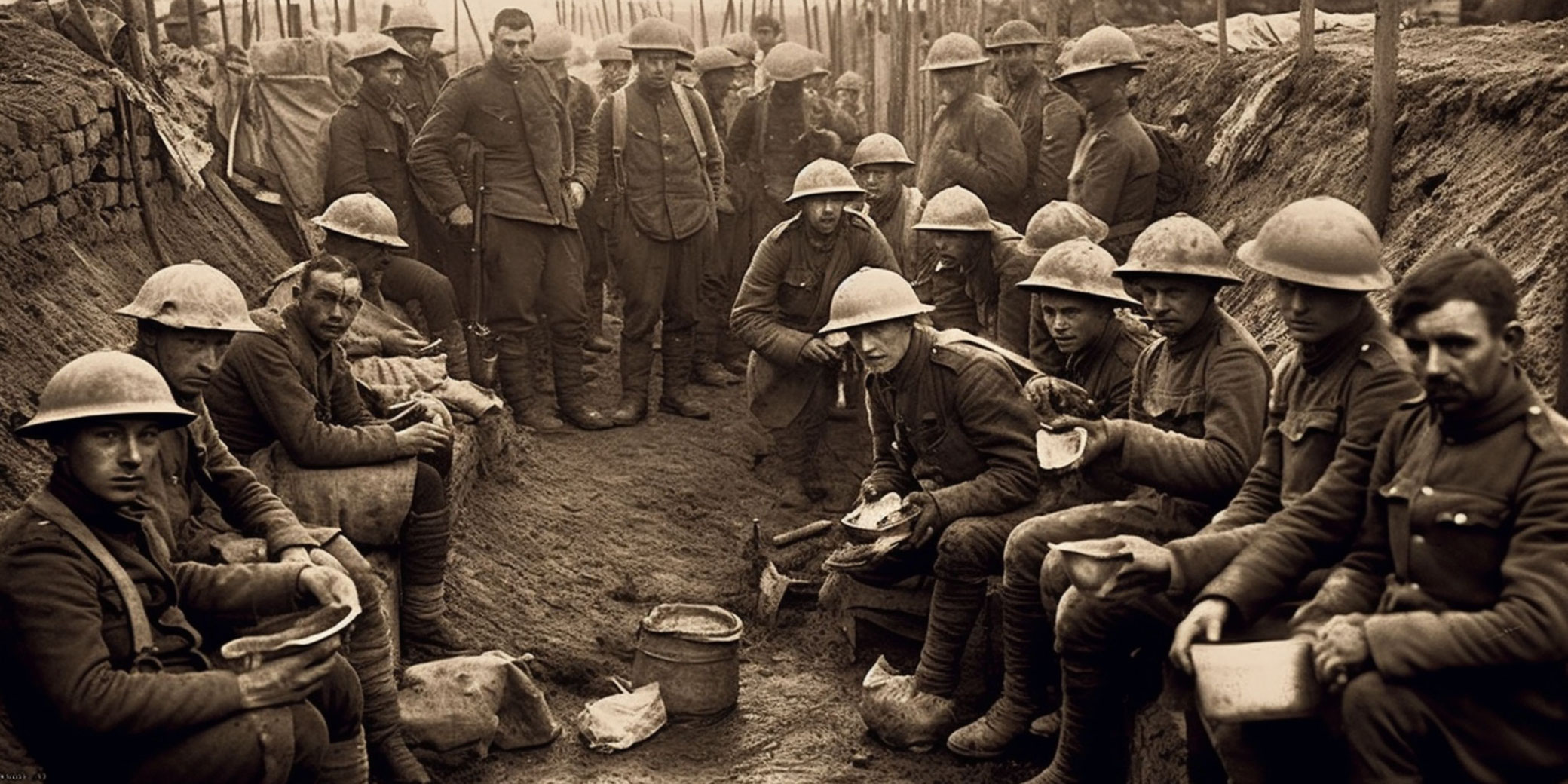
wherearewegoing.net – The outbreak of World War I in 1914 marked the beginning of a global conflict that would forever alter the course of history. It was a war that saw the mobilization of more than 70 million military personnel, including 65 million Europeans, with an estimated 9 million combatants and 7 million civilian deaths as a result of the war. The story of World War I is a tale of trenches, treaties, and the transformation of the world order.

The Spark in the Balkans

The immediate cause of the war was the assassination of Archduke Franz Ferdinand of Austria, heir to the throne of Austria-Hungary, by Gavrilo Princip, a Bosnian Serb nationalist, in Sarajevo on June 28, 1914. This event set off a chain reaction of alliances and treaties, leading to the mobilization of armies and the declaration of war.

The Schlieffen Plan and the Western Front

Germany’s Schlieffen Plan aimed to quickly defeat France through a sweeping maneuver through Belgium before turning south to encircle the French army. However, the plan failed, leading to the establishment of the Western Front, a line of trenches stretching from the English Channel to Switzerland. This front would become the site of some of the war’s most brutal battles, including the Battle of the Somme and the Battle of Verdun.

The Eastern Front and the War of Attrition

On the Eastern Front, the Russian Empire fought against the Central Powers, comprising the German Empire, the Austro-Hungarian Empire, the Ottoman Empire, and later the Kingdom of Bulgaria. The vastness of the Eastern Front and the logistical challenges it presented led to a war of attrition, with massive casualties on both sides.

Technological and Tactical Innovations

World War I was a war of unprecedented technological and tactical innovation. The use of machine guns, tanks, poison gas, and aircraft fundamentally changed the nature of warfare. The war also saw the first use of naval blockades, submarine warfare, and the convoy system to protect merchant shipping.

The United States Enters the War

The United States initially remained neutral but entered the war on the side of the Allies in April 1917, after German submarines sank several American merchant ships. The American entry into the war tipped the balance in favor of the Allies, providing them with the manpower and resources needed to achieve victory.

The Collapse of Empires

The war led to the collapse of four empires: the German, Austro-Hungarian, Ottoman, and Russian empires. The Russian Empire collapsed first, with the outbreak of the Russian Revolution in 1917, leading to the rise of the Soviet Union.

The Armistice and the Treaty of Versailles

The war finally came to an end on November 11, 1918, with the signing of the Armistice. The Treaty of Versailles, signed on June 28, 1919, officially ended the war between Germany and the Allied Powers. The treaty imposed heavy reparations on Germany, stripped it of its colonies, and limited the size of its military.

Legacy of World War I

The legacy of World War I is profound and multifaceted. It led to the creation of new countries in Europe and the Middle East, set the stage for World War II, and prompted a reevaluation of the nature of warfare and the impact of nationalism. The war also marked the beginning of the United States’ emergence as a global superpower.

From the trenches of the Western Front to the negotiation tables of Versailles, World War I was a defining moment in history. It was a war that reshaped the world, leaving a legacy that continues to influence global politics, military strategy, and the collective memory of humanity.